How to choose the best cat window perch for an indoor cat.

The "best" cat window perch is the one your cat will actually lie on, fixed to a window it already likes. This guide walks through the main styles, what suits which cat, and the window checks most people skip.
Why a window perch is worth it
Vets who specialise in cats treat raised resting places as a core need, not a luxury. The AAFP and ISFM environmental needs guidelines list elevated areas alongside food, water and litter, because height lets a cat watch its surroundings and feel in control. The AAFP's lifestyle position statement specifically pictures a window perch as a way for an indoor cat to watch outdoors safely. A window adds the one thing a shelf can't: something moving to watch.
The four main types
1. Mesh hammock
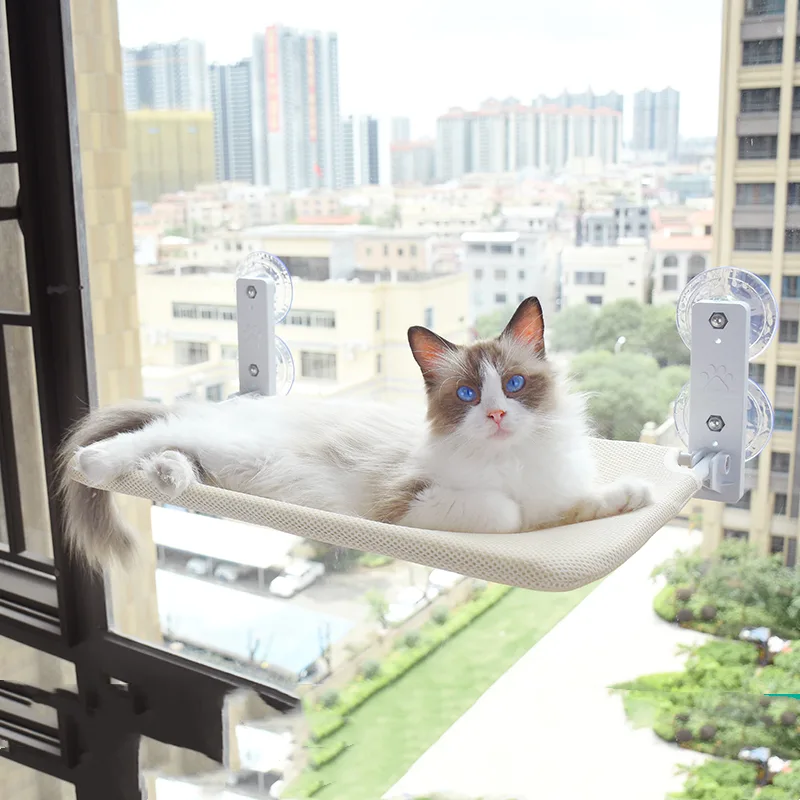
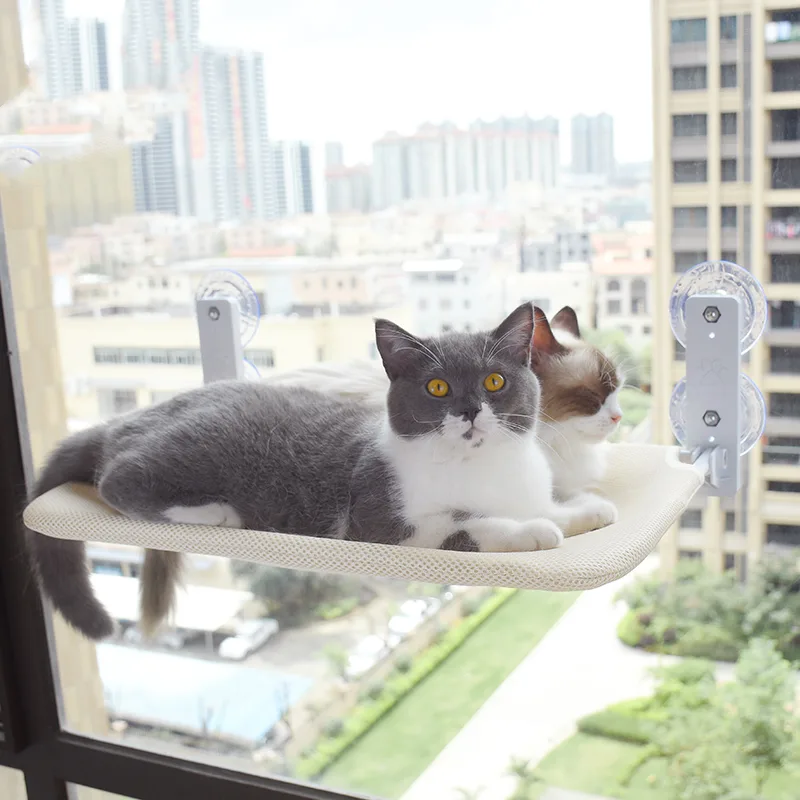
A fabric sling stretched in a frame, held to the glass with suction cups and support cords. Light, airy and easy to wash. A good first perch for most cats. Our Cat Window Perch is this style.
2. Bed with raised sides
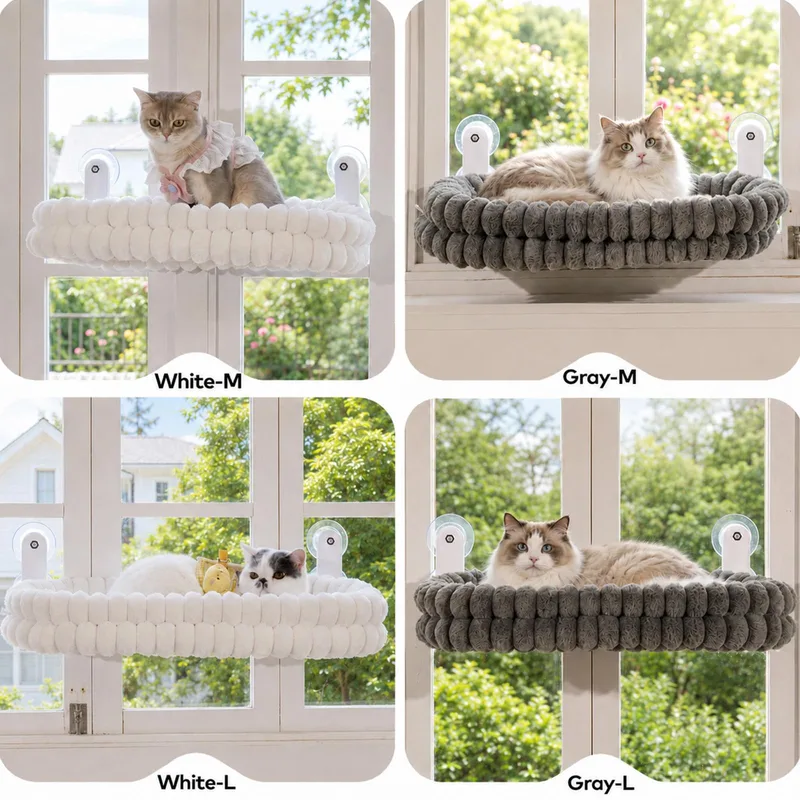
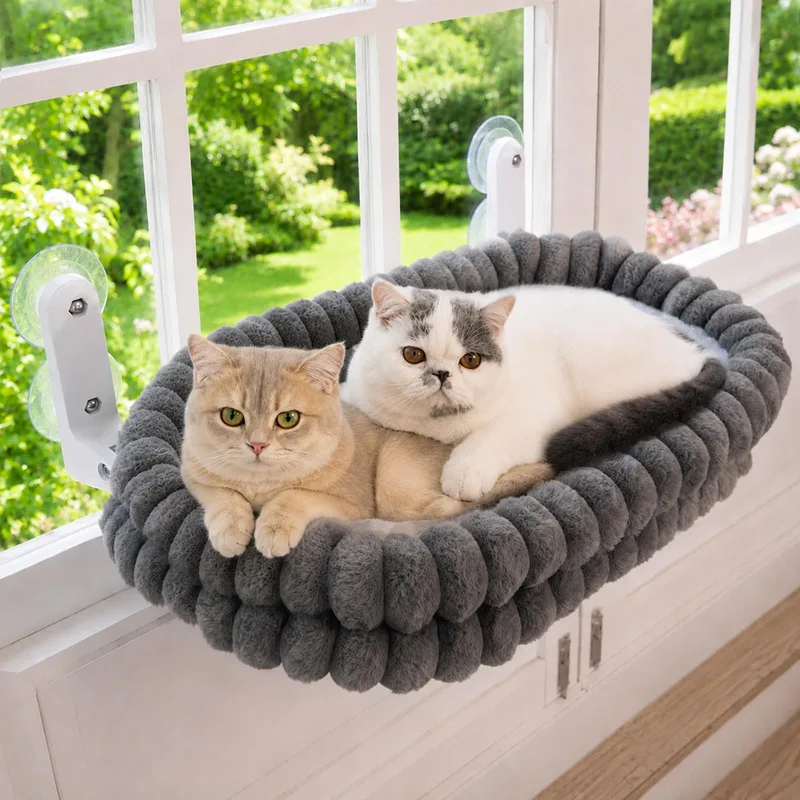
A padded bed with walls, for cats who like to curl up and tuck their chin on an edge. Usually a bit bulkier on the glass. See the Cloud Cat Window Perch, which has a reversible cushion for warm and cool months.
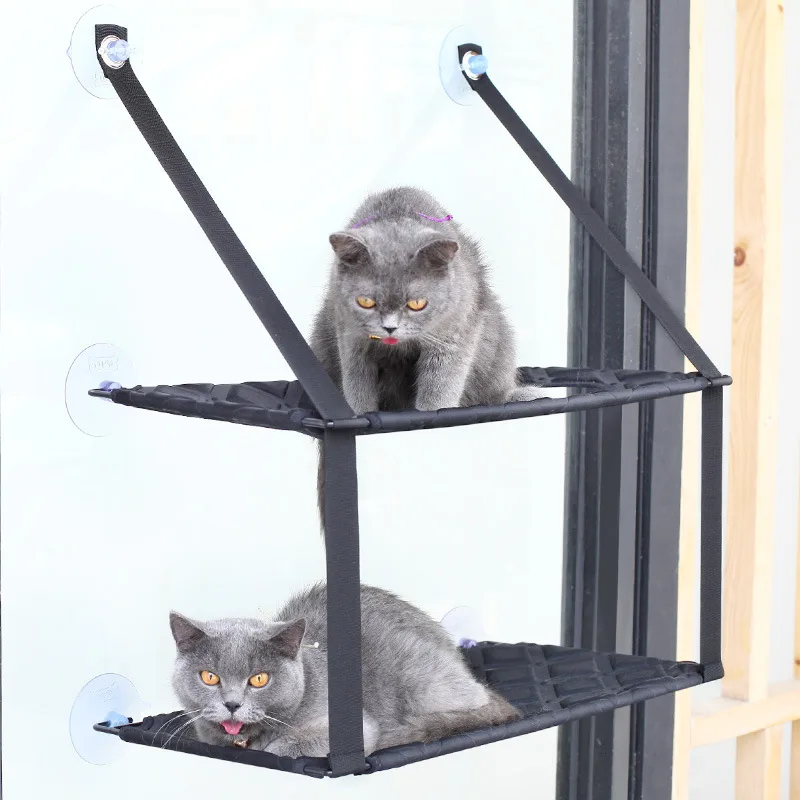
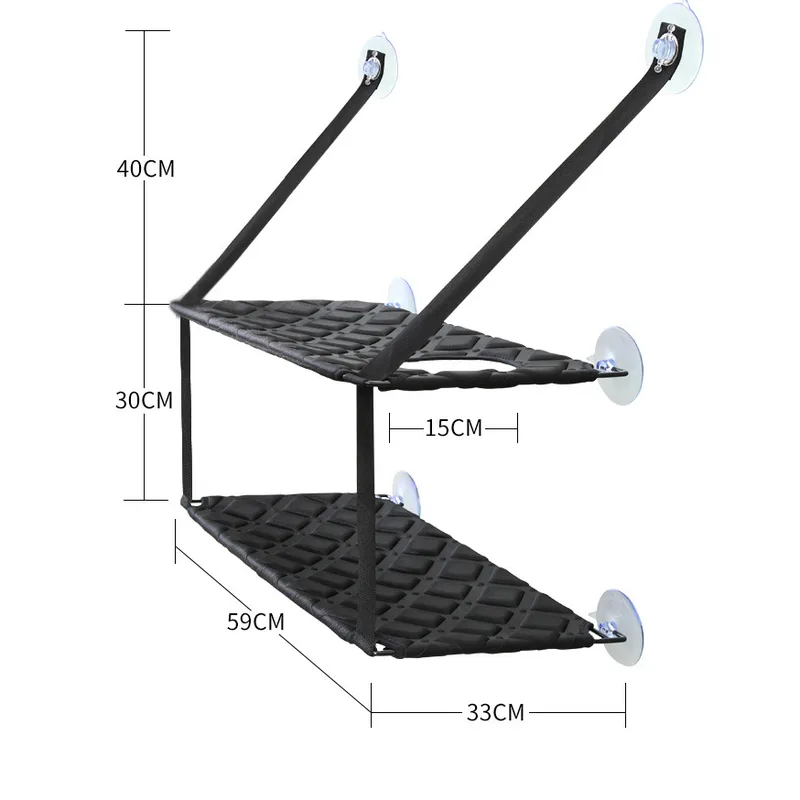
3. Two-tier
Two levels on one window. Useful in multi-cat homes, because the guidelines above recommend giving cats choices so they don't have to compete for the best spot. Look at the Two-Tier Cat Window Perch.
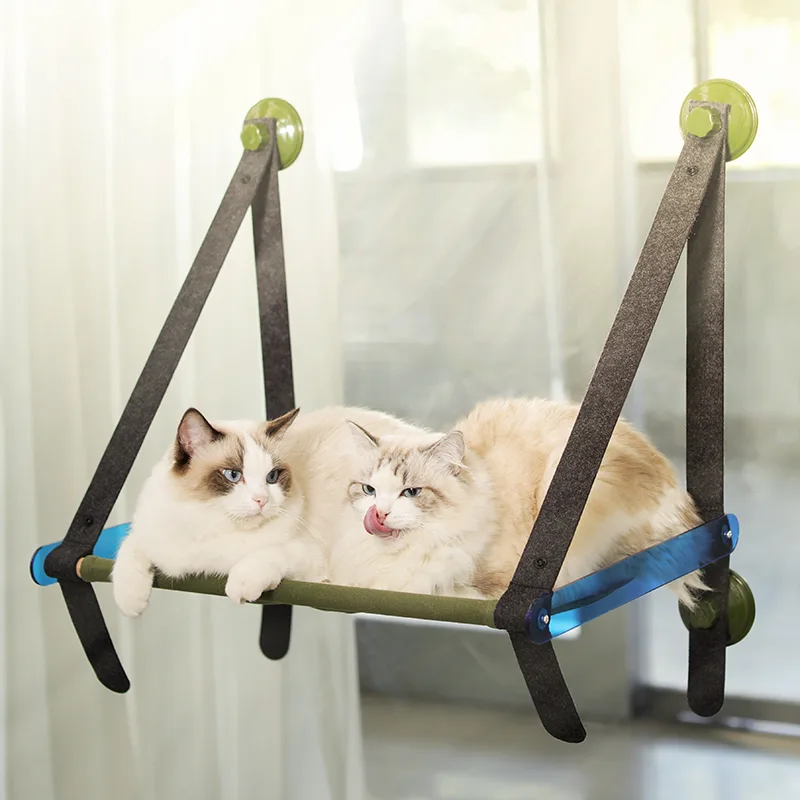
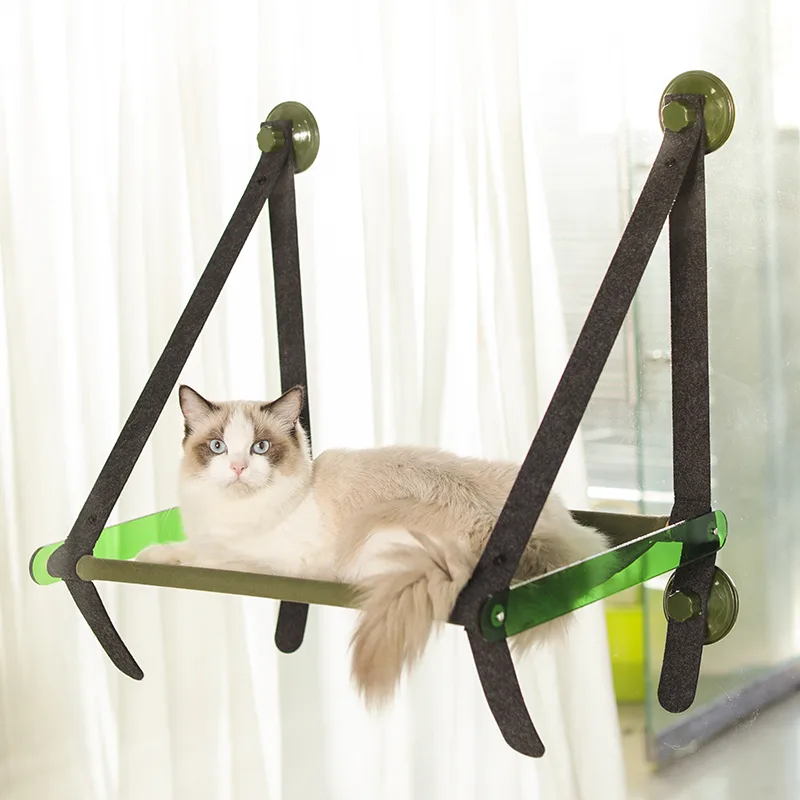
4. Slung seat
A canvas seat hung between rails, with open sides that leave more of the window clear. Folds flat when not in use. The Window Sling Cat Hammock is this style.
Match it to your cat
- Sprawlers (lie flat on their side): a wide hammock or slung seat.
- Curlers (tight ball, chin on an edge): a bed with sides.
- Two or more cats: two-tier, or two perches on different windows.
- Older or less agile cats: fit the perch low, near a sill, chair or set of steps so getting up is easy.
- Large cats: read the maker's stated limit on the product page and choose generously. We publish the supplier's figure where one is given, and we always recommend testing by hand first.
Check your window first
Suction cups need smooth, flat, clean glass. Measure the pane: the perch plus its cups need a clear area of flat glass, not frame. Avoid tinted film, frosted, textured or leadlight glass, and avoid fitting across two panes. Check the product's size on its page and compare it to your pane before buying.
No suitable glass? A wall-mounted option, like the Wall-Mounted Cat Hammock fitted beside the window, gives the same view and is screwed into the wall.
Before you buy: a quick checklist
- Pane size measured, glass smooth and untreated.
- Your cat already sits near this window.
- Cover is removable or washable.
- You can see the maker's instructions and stated limit.
- You're happy to test it by hand and supervise the first few sessions.
Want the full Cat TV effect? Put a feeder on the outside of the same pane. The Cat Window Kit pairs a perch with a window feeder.
Frequently asked questions
Where should I put a cat window perch?
On a window your cat already likes, with smooth flat glass and a view of a tree, shrub or garden where birds pass. Sunny windows are popular.
Are hammock or bed perches better?
Neither is better overall. Cats that sprawl usually prefer a flat hammock; cats that curl up often prefer a bed with raised sides.
Do window perches work on double glazing?
Suction cups only touch the inner surface, so double glazing is usually fine as long as that surface is smooth, flat and has no film.
How do I get my cat to use a new perch?
Put a familiar blanket or a few treats on it, fit it at a window your cat already sits at, and give it a few days.
Sources
- AAFP & ISFM Feline Environmental Needs Guidelines
- AAFP position statement: indoor vs outdoor lifestyle
Written by the Perchwild team. Questions? Write to us.